A Thousand Torii
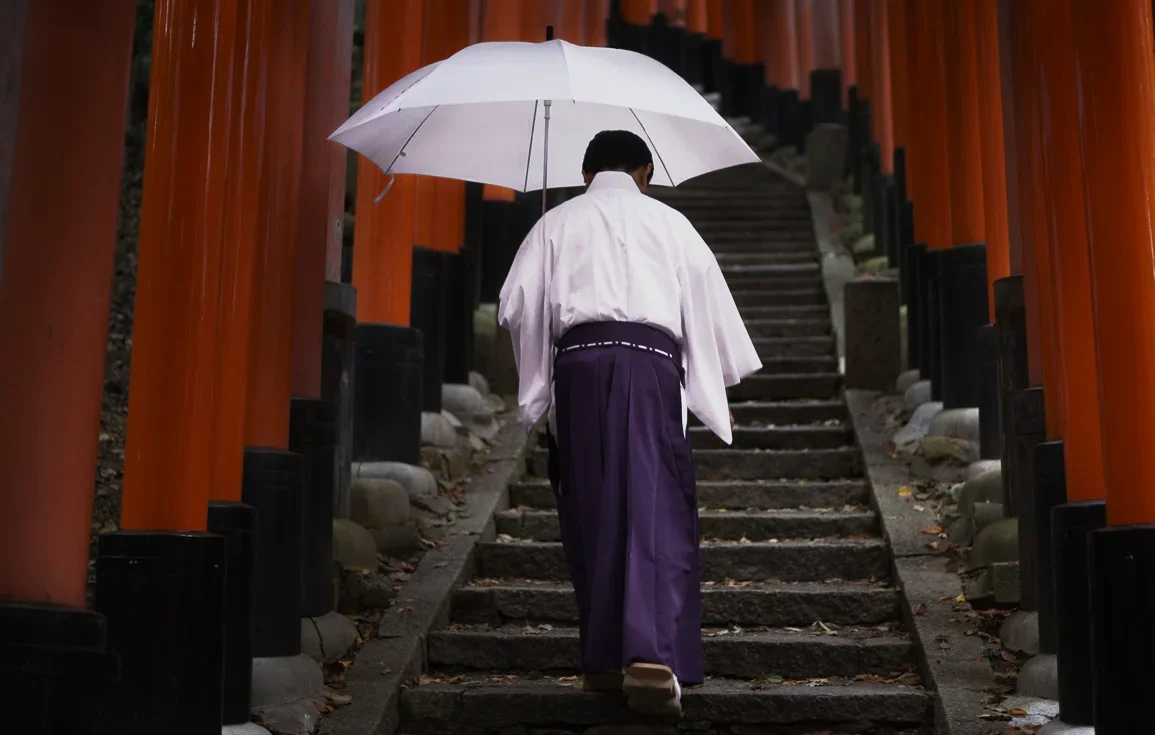
Kyoto’s torii tunnel reminds me of a scene from the film “Memoirs of a Geisha.” In the film, the young, heartbroken Chiyo runs away from the geisha house in despair, convinced that her life is over. A powerful businessman named the Chairman approaches her, offering words of encouragement. Moved by his kindness, she develops a lifelong ambition: to become a successful geisha and enter his world. Accompanied by John Williams’ intense score, she runs through the iconic vermillion gates, praying for her future.
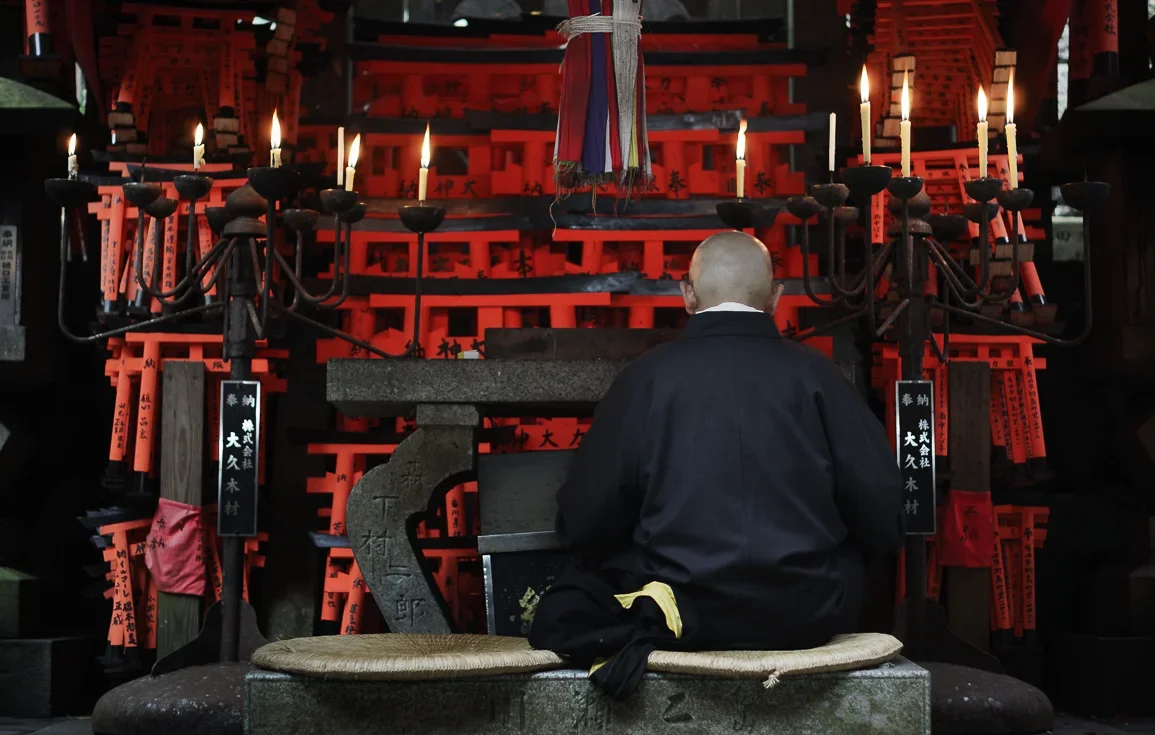
It is the torii tunnel that has put the Fushimi Inari Shrine on the tourist map. Walking through it creates a dreamlike, slightly disorienting sensation, as if you’re entering another world. Beyond the gates lies a seemingly endless array of hidden places, including burial mounds, sculptures of deities and other sacred artifacts. Access is via an intricate network of stairs and paths leading to the summit of Mt. Inari. The whole complex is so vast that you could easily spend days exploring and still not run out of things to discover.
Dreamlike, Slightly Disorienting Sensation
The shrine’s popularity, however, comes at a price. During the day, the lower areas around the torii tunnel are packed with tourists. One way to escape the crowds is to explore the more remote areas, where they thin out quickly.
Fushimi Inari is open 24 hours a day, with no fences or admission fee. You can visit it early in the morning or even at night, when it’s almost empty. In the dark, the shrine provides a refreshingly different experience compared to daytime. Some even find it a little eerie.
The site is within easy reach of Kyoto Station and is served by two lines: the JR Nara line and the Keihan main line.